 Official government website of the Government of the Kingdom of Saudi Arabia
Over 4,000 Expenditure Efficiency Initiatives in Government Entities
Published on 2025-02-20
Expenditure Efficiency Teams in government entities contributed to enhancing the efficiency of government expenditure planning through more than 4,000 initiatives from 2019 to 2024. These initiatives covered various fields, including education, health, finance, industry, sports, human resources, and more. National success stories emerged, with their positive impact directly reflected on both the nation and its citizens.
In cooperation with EXPRO, the Madinah Region, represented by the Municipality and the Development Authority, activated a package of initiatives that contributed to achieving expenditure quality and improving the quality of services provided to residents and visitors. As a result, the resident satisfaction rate with quality of life reached 66%, and the project failure rate dropped to less than 1% compared to previous levels. Additionally, innovative contractual models were implemented, resulting in a 94% compliance rate in establishments by 2024.
As part of the continued success in enhancing expenditure efficiency, the Ministry of Foreign Affairs introduced 40 indicators related to expenditure efficiency. The Ministry also documented 27 initiatives via EXPRO’s platform dedicated to Expenditure Efficiency Teams, with an estimated financial impact of SAR 1.7 billion. Moreover, the Ministry improved service quality for visitors to the Kingdom through the e-transformation initiative for Hajj and Umrah visas. Due to the success of this initiative, the Ministry launched a new e-transformation initiative for issuing visit, residence, and work visas, which was activated in 2024.
Amid the rapid digital transformation in the Kingdom, the Saudi Data and AI Authority (SDAIA) focused on improving the efficiency and security of government services. After government entities previously relied on traditional data centers with high operational costs and limited scalability, more than 180 entities were enabled to transition to the “DEEM Cloud” operated by the National Information Center. This contributed to improved operational efficiency and reduced costs for government entities, achieving a financial impact exceeding SAR 5 billion through optimal utilization of technical resources and enhanced infrastructure service effectiveness.
In pursuit of operational efficiency, the “Sharek” initiative by the King Saud University Medical City was launched to highlight programs and projects that enhance operational efficiency and reduce waste. Since its inception in 2020, over 400 projects have participated, with an estimated financial impact of SAR 500 million. A key initiative in the event was the “Automated Approval of Laboratory Results” initiative, which aimed to automate the approval and submission of medical test results. This initiative reduced the time required to submit laboratory results by 10% to 35%.
The Expenditure Efficiency Team at the Public Health Authority "Weqaya," operating in partnership with the Ministry of Health, has established the National Newborn Screening Program to eliminate disabilities. Studies and research in the Kingdom have shown a higher rate of genetic disorders among newborns, with one affected infant per 1,000 births compared to one per 4,000 globally. The early detection of any disabilities or health problems aims to initiate appropriate treatment at an early stage. Data extracted from the screenings were analyzed, and 21 types of the most common genetic and metabolic diseases in the Kingdom were studied, such as metabolic disorders and endocrine diseases. A database was created to catalog all types of genetic disorders covered by the program. Therefore, “Weqaya” and the Ministry of Health, in partnership with EXPRO, worked to increase the coverage rate of early screening for newborns to reduce disabilities, in addition to monthly follow-up of the implementing entities. This led to the enhancement of children's health and the improvement of healthcare quality, as well as the improvement of the health monitoring and evaluation system, the promotion of prevention and healthcare, and the reduction of the psychological and social burden on the parents of affected children. It also improved efficiency and effectiveness in the use of health resources and financial planning. This improvement in efficiency and financial planning helped avoid the costs of treating cases detected late by 56%, which is estimated at approximately SAR 2 billion.
Furthermore, King Faisal Specialist Hospital has enhanced operational efficiency by implementing 70 initiatives focused on optimizing expenditure, yielding a financial impact of SAR 13 billion. The hospital has demonstrated exceptional performance in organ transplantation, with distinguished outcomes in various specialties, including heart, lung, liver, kidney, pancreas, bone marrow, and stem cell transplants. In pursuit of continuous efficiency improvements, the hospital established a Capacity Command Center, which has facilitated over 350,000 interventional procedures through real-time monitoring systems. This center has also improved demand forecasting, thereby mitigating risks and resulting in a 33% reduction in patient waiting times.
Similarly, to improve the quality of government projects in the Eastern Province, the Regional Development Authority implemented an integrated budgeting model. This model prioritizes projects according to regional needs and development plans. Furthermore, specialized teams consolidated projects with similar scopes, resulting in a sustainable financial impact of SAR 7.6 billion.
EXPRO recently launched the fourth edition of the awareness campaign “Evolution of Tradition” to introduce the pivotal role of Expenditure Efficiency Teams in government entities in improving the efficiency of government expenditure planning through a set of procedures and initiatives.
In cooperation with government entities, EXPRO has advanced the adoption of expenditure efficiency practices and enhanced awareness. It developed six guiding manuals on the formation of Expenditure Efficiency Teams in government entities, the methodology for identifying opportunities to raise expenditure efficiency, supporting teams in spreading the culture of expenditure efficiency, and improving performance of the Sustainability Key Elements Program.
Additionally, EXPRO organized specialized workshops for expenditure efficiency team leaders, with its Academy delivering tailored training on key methodologies, including opportunity identification, problem-solving, change management, expenditure review, execution management, capacity and demand analysis, and operational excellence.
EXPRO supports government entities in enhancing expenditure efficiency, optimizing public procurement, and improving the quality of projects, assets, and facilities. Additionally, it strengthens infrastructure, programs, initiatives, and operational planning, develops policies, regulations, and methodologies, and builds national talent capabilities.
|
Read Also: Latest News
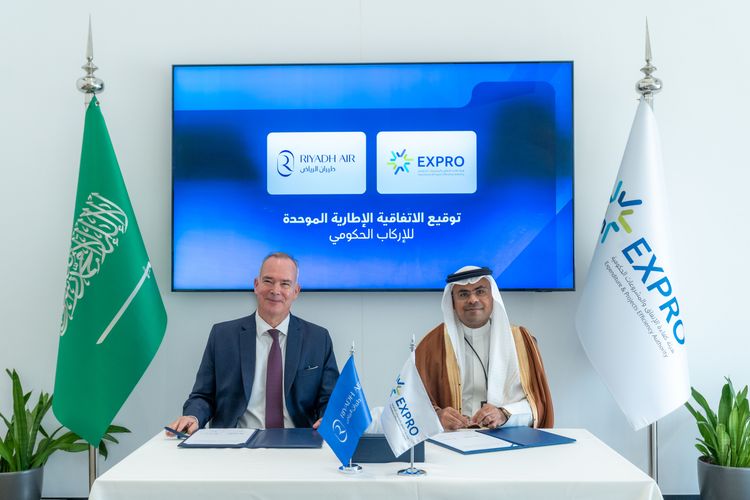
EXPRO Expands Government ERCAB Options with Riyadh Air Joining the Unified Framework Agreement
Published on 2026-08-19
Last Update Date: 2026-08-19
Minister of Finance Approves Seven Controls for Contracting, Procurement, and Quantities in Government Procurement
Published on 2026-07-23
Last Update Date: 2026-07-29

Ali Alwabel appointed as the spokesperson for Government Expenditure & Projects Efficiency Authority
Published on 2026-03-31
Last Update Date: 2026-04-09
Last Update Date: 09/17/2025 - 12:13 AM Saudi Arabia Time
Was this page useful?