Official government website of the Government of the Kingdom of Saudi ArabiaOfficial government website of the Government of the Kingdom of Saudi Arabia

Seventh Cycle of the Sustainability Key Elements Program (SKEP) Launched with Participation of 83 Government Entities

Published on 2026-01-08
Seventh Cycle of the Sustainability Key Elements Program (SKEP) Launched with Participation of 83 Government Entities

The Government Expenditure and Projects Efficiency Authority (EXPRO) has announced the commencement of the seventh cycle of the Sustainability Key Elements Program, with the participation of 83 government entities, aiming to enhance expenditure efficiency methodologies and practices within these entities.


The Sustainability Key Elements Program supports change management in expenditure efficiency practices within government entities. It serves as a diagnostic tool that identifies performance gaps in the practices standardized by EXPRO, focuses on key areas for improvement and causes of waste, and charts a roadmap for improving the maturity of practices across the expenditure lifecycle.


The seventh cycle includes workshops introducing the program's strategy and roadmap through to 2030, as well as key developments and updates to the program's standards and indicators. This aims to elevate the readiness of government entities, ensure the application of best practices and methodologies, and identify strengths and opportunities for improvement to achieve sustainability in expenditure efficiency. This cycle of the SKEP Program aims to contribute to directing government resources in line with national strategies, enhancing financial sustainability, and raising performance efficiency in the government sector by evaluating and improving institutional practices. It also supports government entities in adopting advanced work methods for managing resources efficiently and effectively, in addition to striving for excellence in applying best practices throughout the expenditure lifecycle. This is achieved by providing the necessary tools to ensure continuous improvement in expenditure efficiency practices within government entities and leading efforts to implement the policies, methodologies, and guides developed by EXPRO to achieve an impact on the sustainability of government expenditure efficiency.


The expenditure lifecycle consists of seven main pillars, encompassing practices and standards adopted by entities and evaluated through a model for measuring maturity levels in expenditure efficiency according to specific criteria and mechanisms. The seven pillars include: Leadership and Strategy, Planning and Preparation, Capacity Building, Procurement, Projects, Assets and Facilities, and Impact Measurement.


The performance evaluation of entities participating in SKEP Program is conducted using an integrated model for measuring institutional maturity levels in expenditure efficiency. This utilizes criteria and mechanisms approved by EXPRO, with the participation of members of the Independent Committee for SKEP program, which includes a number of leaders from government entities and independent experts from the private sector.


EXPRO supports government entities in enhancing expenditure efficiency, optimizing public procurement, and improving the quality of projects, assets, and facilities. Additionally, it strengthens infrastructure, programs, initiatives, and operational planning, develops policies, regulations, and methodologies, and builds national talent capabilities.

Read Also: Latest News
Page cover image

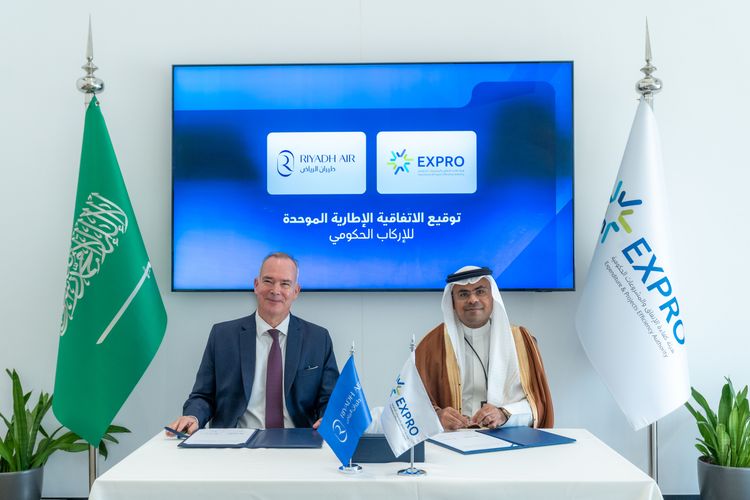
EXPRO Expands Government ERCAB Options with Riyadh Air Joining the Unified Framework Agreement

Government Expenditure and Projects Efficiency Authority (EXPRO) has signed a framework agreement with the new national airline "Riyadh Air" to join and activate its services through the unified framework agreement for government ERCAB in cooperation with the Ministry of Finance and the National Center for Government Resource Systems. This step will contribute to expanding the options available to government entities and ERCAB service beneficiaries through Etimad platform, as well as enhancing the efficiency and flexibility of government travel services.  The joining and activation of Riyadh Air will further enhance competition among national carriers, alongside the existing carriers under the agreement, Saudia Airline and Flyadeal. This will contribute to increasing seat capacity, offering a broader network of destinations, a wider range of flight schedules, in addition to enhancing booking flexibility and providing different packages of services that serve diverse needs of public sector employees and government ERCAB beneficiaries.  Etimad platform is in the process of automating and facilitating the entire government travel procedures through government ERCAB service, from creating ERCAB orders to booking and electronically issuing travel tickets, through an integrated digital experience that ensures raising operational efficiency and enhancing customer experience.  Unified procurement framework agreements is one of EXPRO'S contracting methods on behalf of government entities, in its capacity as competent authority of unified strategic procurement in Government Tenders and Procurement Law, which is a unified agreement with one or more service providers with the aim of achieving the best value for public money, enhancing government spending, saving time spent in the purchasing process, as well as unifying the prices of products and services provided to government entities, improving its quality and standardizing its specifications.  It is worth noting that EXPRO has recently signed an agreement with Flynas to join the Unified Framework Agreement for Government ERCAB and will subsequently announce the activation of its services. EXPRO will continue to diversify the suppliers and add new carriers to the unified framework agreement for government ERCAB with the aim of leveling up the flexibility and efficiency of government travel services and meeting the needs of government entities and ERCAB beneficiaries.

Published on 2026-08-19

Last Update Date: 2026-08-19
Page cover image

Minister of Finance Approves Seven Controls for Contracting, Procurement, and Quantities in Government Procurement

His Excellency the Minister of Finance, Mohammed bin Abdullah Aljadaan, has approved seven contracting, procurement, and quantity controls as part of ongoing efforts to develop the government procurement ecosystem, enhance spending efficiency, and strengthen governance and compliance in contracting and procurement processes. The controls are intended to help achieve the best value for public funds and improve the quality of government services. The Government Expenditure and Projects Efficiency Authority (EXPRO) develops the Contracting, Procurement, and Quantity Controls, which serve as specialized regulatory documents for specific government procurement services. Government entities subject to the Government Tenders and Procurement Law are required to rely on these controls when preparing RFPs documents, thereby ensuring standardized procurement practices and strengthening compliance with relevant laws and regulations. The controls aim to provide government entities with a unified framework and technical standards that support the accurate identification of actual procurement needs, improve planning and procurement efficiency, and enhance the quality of tender documents. They also contribute to improving spending efficiency and reducing the time required to prepare the RFPs by providing a unified technical and regulatory reference that supports government entities throughout the procurement and contracting lifecycle.The approved controls cover the following categories: catering services for military and security sectors; city cleaning services; parks, afforestation, and irrigation services (urban areas); security guarding services; marketing services; uniforms; and furniture procurement. These controls define the technical and regulatory requirements, as well as the contracting and procurement mechanisms, to promote standardized specifications and requirements across government entities.The approval of these controls builds on ongoing efforts to develop the enablers, policies, and regulatory tools governing government procurement. This supports improved government spending efficiency, strengthens fiscal sustainability, and advances the objectives of Saudi Vision 2030 by adopting best practices, enhancing government performance, and maximizing the economic and developmental impact of public expenditure. To view the Contracting, Procurement, and Quantity Controls, please visit the following link: https://www.uqn.gov.sa/digital?date=2026-07-23 

Published on 2026-07-23

Last Update Date: 2026-07-29

Page cover image

Ali Alwabel appointed as the spokesperson for Government Expenditure & Projects Efficiency Authority

The Board of Directors of the Government Expenditure & Projects Efficiency Authority has issued a decision to appoint Mr. Ali bin Mohammed Alwabel as EXPRO’s official spokesperson in addition to his current role as the Executive Director of Corporate Communications general Department. The decision comes in efforts to enhance the communication channels between EXPRO and the local and international audiences, and to support the continued cooperation with the media organizations. The aim is to deliver EXPRO’s media message through a clear and transparent approach that reflects its contributions and achievements, while also facilitating access to information related to its projects and initiatives.

Published on 2026-03-31

Last Update Date: 2026-04-09

Last Update Date: 03/12/2026 - 3:18 PM Saudi Arabia Time

Was this page useful?

301 visitors found this page helpful out of 531